What do we need to know?
Before we can understand the implications of Pluto replacing Earth's orbit, we need to consider several key factors:
- Pluto's Velocity
- Earth's current position and conditions
- The gravitational effects on the solar system
According to NASA's Pluto Facts, Pluto has a highly elliptical orbit that takes it far beyond the orbit of Neptune. Pluto is also ~39 AU from the Sun.
Earth, on the other hand, is located at an average distance of about 1 AU from the Sun. Earth's orbit is nearly circular and it takes approximately 365.25 days to complete one orbit around the Sun.
Pluto is 1.31 x 10^22 kilogrammes in mass( about 0.002 times Earth's mass).
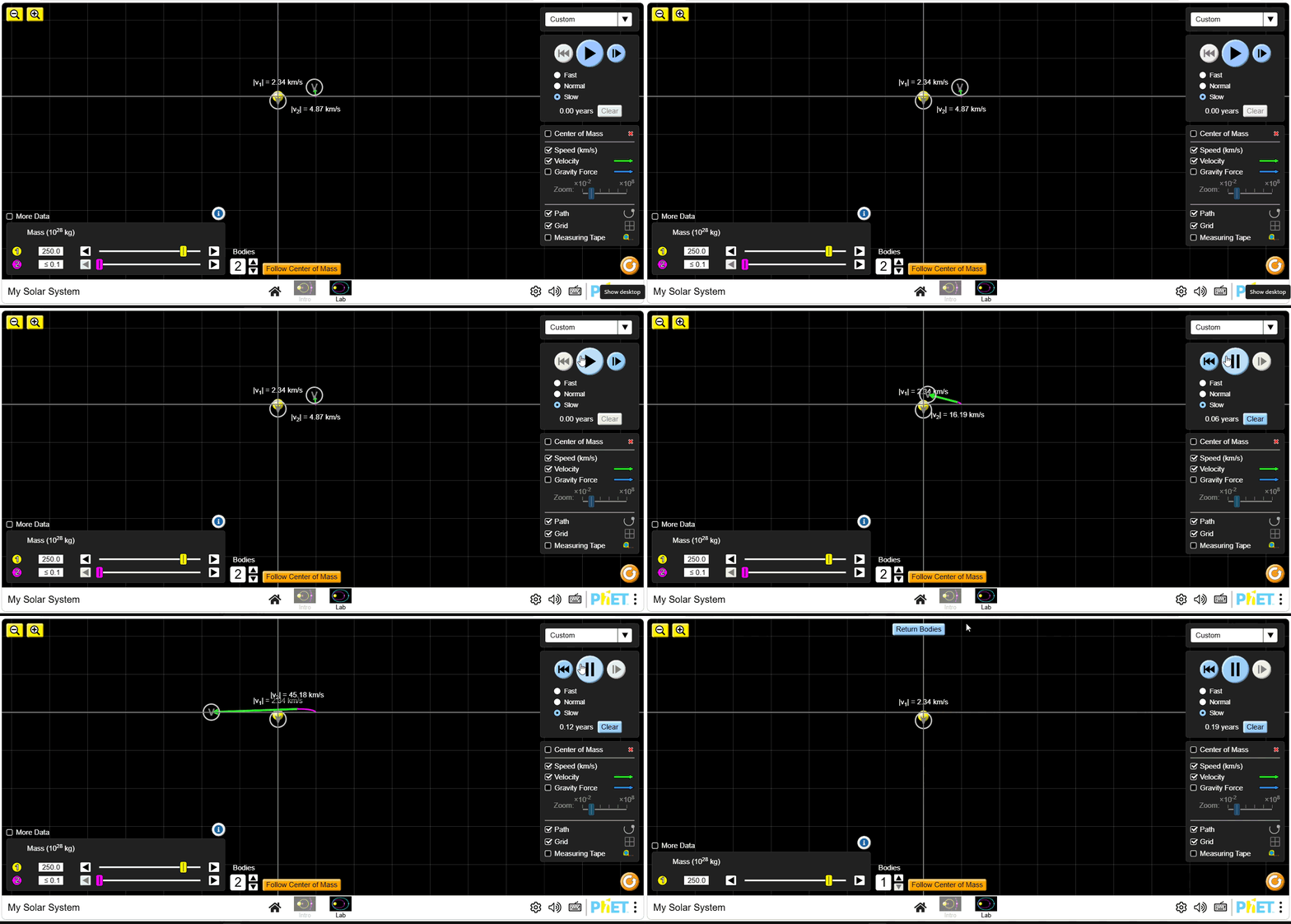
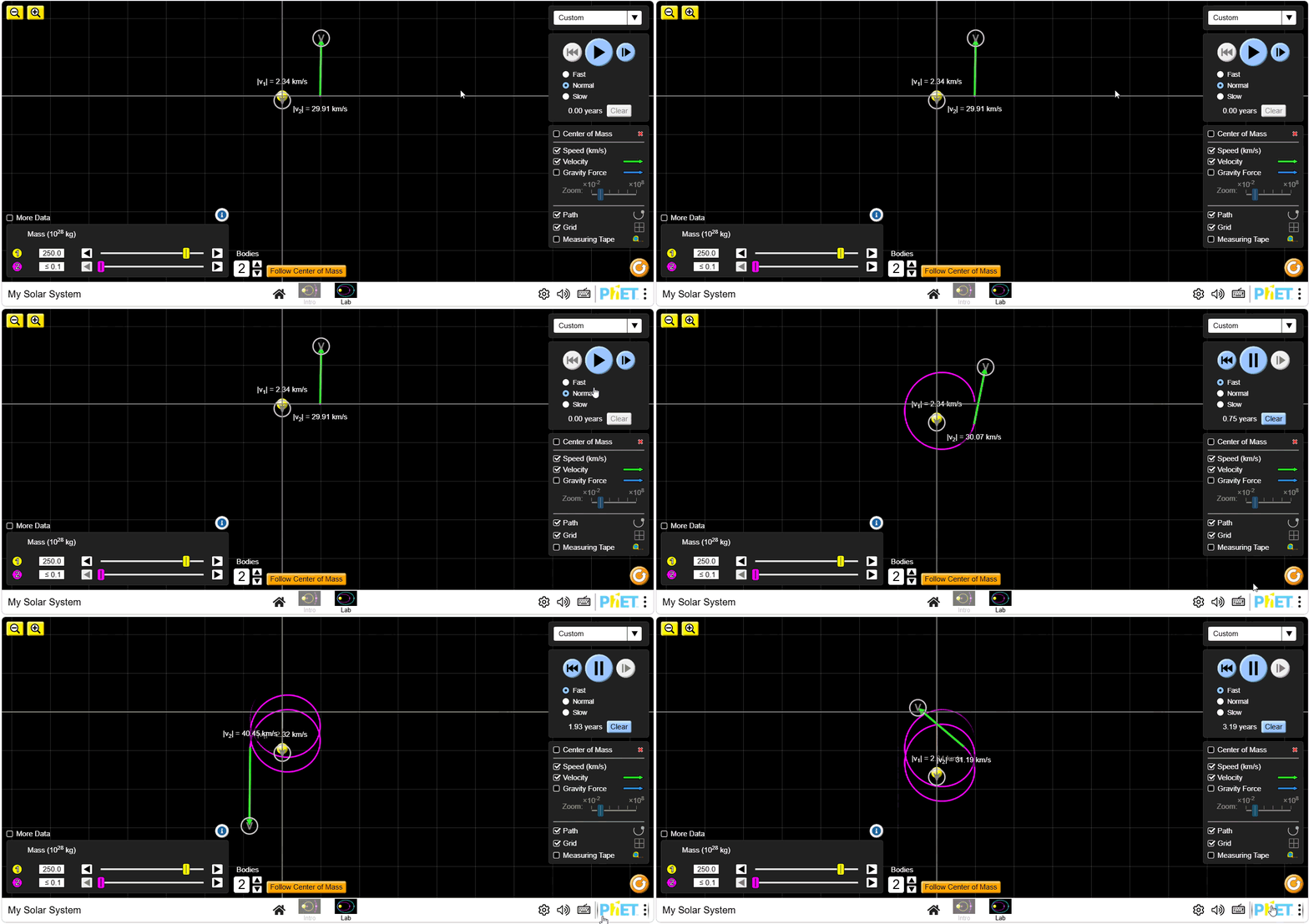
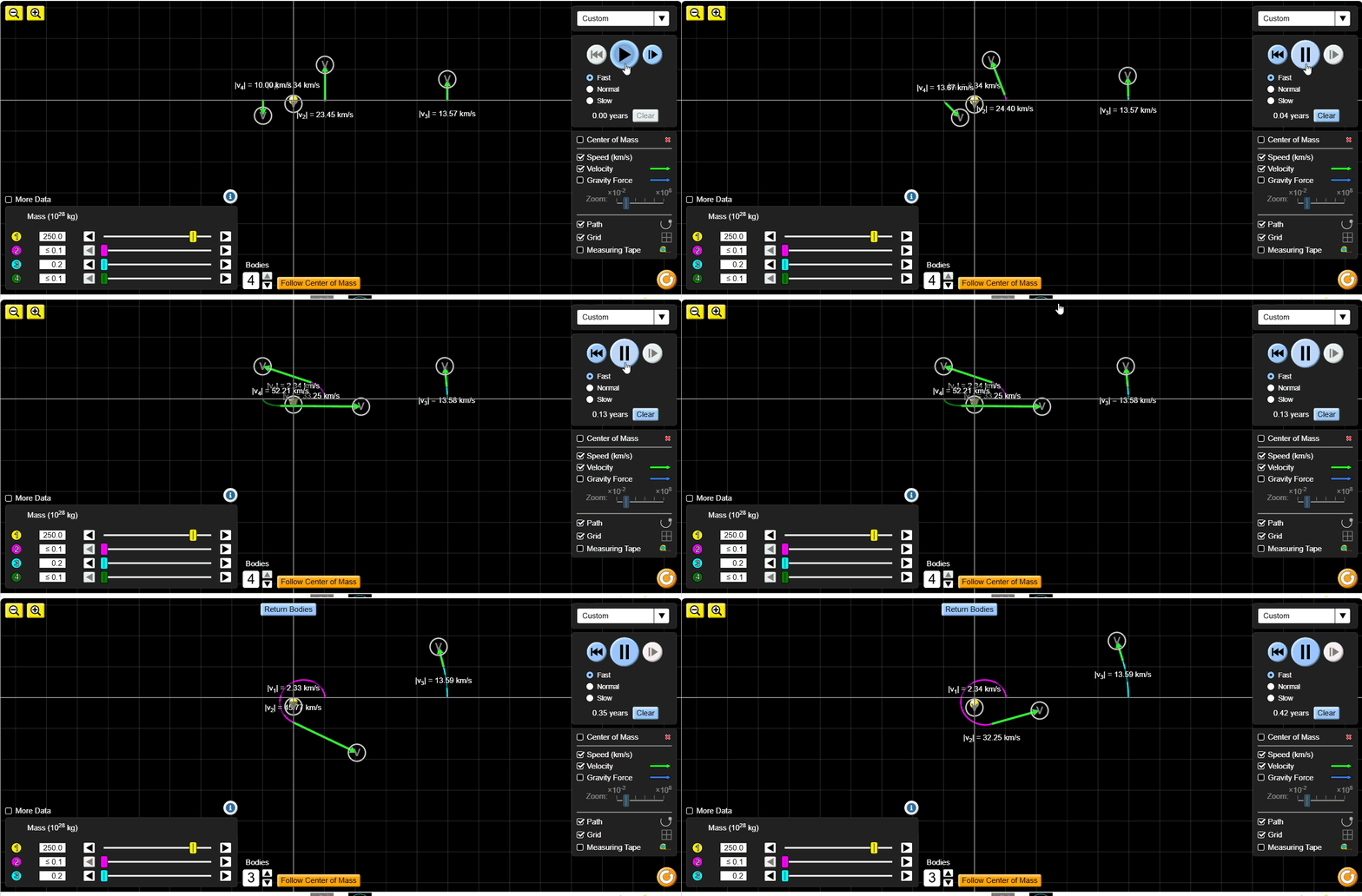
To experiment with these concepts, I will use PhET's Solar System simulation to predict the outcomes
of such a significant change in our solar system. Unfortunately, PhET only allows for the simulation of a minimum number of mass for planets(0.1 * 10^28kg).
We are going to assume that Pluto's mass is 0.1 * 10^28kg for the sake of this experiment, which is much higher than its actual mass. This will allow us to observe the effects of Pluto's orbit more clearly in the simulation.
We will also assume that Pluto maintains its current velocity (4 km/s) and orbital characteristics as it replaces Earth's orbit.